
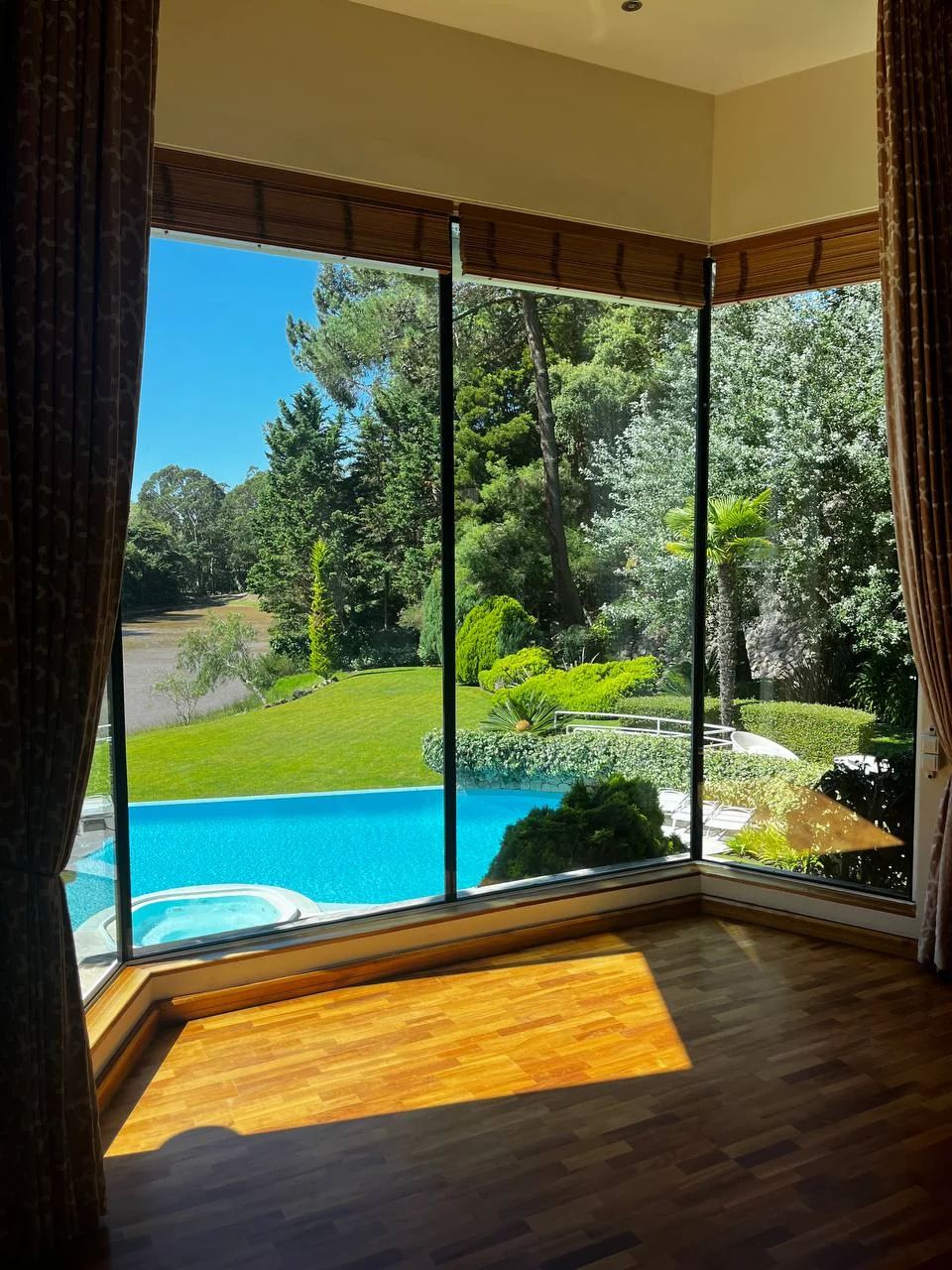
Design from both sides of the glass
A large residential opening is part of the exterior envelope and part of the interior experience. From outside, proportions, mullions, flashing, drainage, and facade materials have to align. From inside, the same opening affects furniture, circulation, glare, privacy, window treatments, electrical work, and the way rooms connect to the landscape.
The right solution starts with the desired view and use of the room, then works backward through glass selection, framing, structural support, waterproofing, and finish details.
Performance is more than a glass specification
U-factor, solar heat gain, visible light, coatings, tint, safety glazing, acoustic needs, and local energy requirements influence the glass makeup. Orientation, exterior shading, roof overhangs, nearby trees, and interior finishes influence how that specification performs in the actual house.
Comfort problems are difficult to solve after installation. Early coordination with the mechanical design, shading strategy, and control of air and water at the perimeter is more effective than relying on one product value to carry the entire result.
Protect the opening through installation
Successful installation depends on verified rough openings, level and plumb substrates, compatible membranes and sealants, sill drainage, fastener locations, glass handling, and realistic access. Large units may also require lifting equipment and a sequence coordinated with exterior cladding and interior finishes.
Protection continues after the unit is set. Glass, frames, tracks, hardware, and adjacent finishes should remain protected from later trades, while operation, drainage, seals, and final cleaning are checked before turnover.